L5-ACC Audio Control Center

preamp

Starting at $15,000 / Each


Prices shown do not include duty, taxes, or freight

2025.  Shipping this fall.

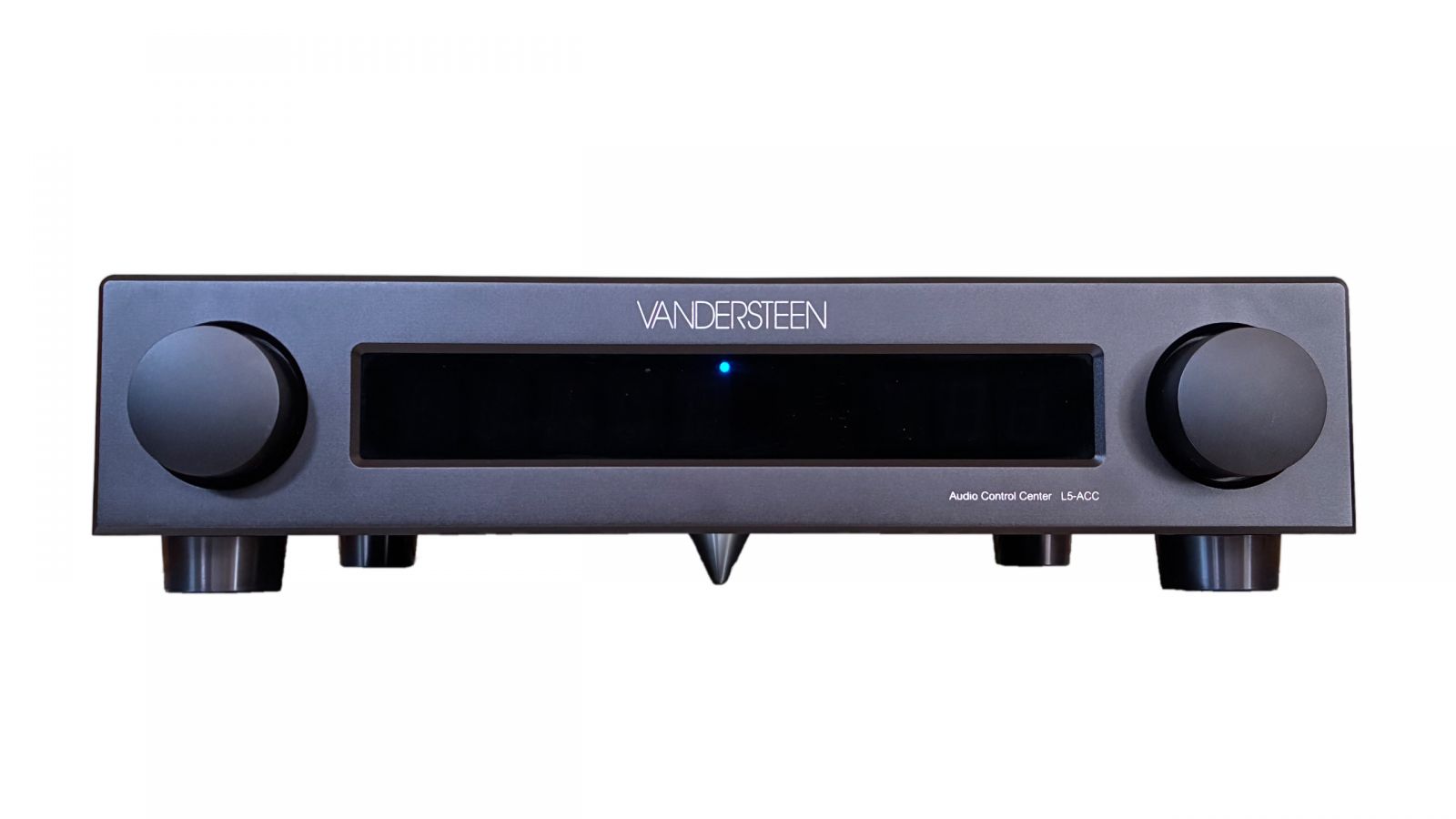
Vandersteen L5-ACC Audio Control Center Preamp

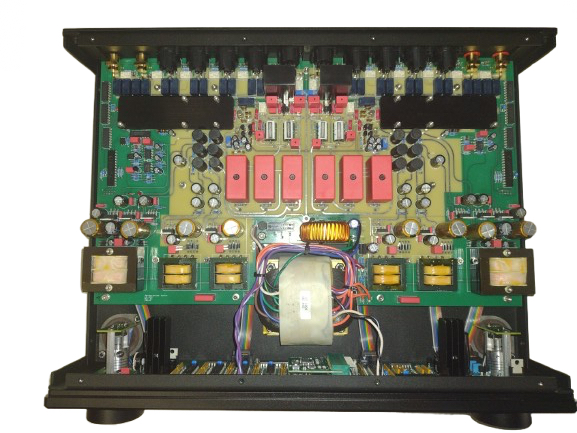
The new Vandersteen Audio Control Center is a meticulously engineered component designed to deliver an unparalleled level of purity and precision in audio reproduction.

At the heart of the Vandersteen Audio Control Center is a state-of-the-art circuit design that prioritizes signal integrity, only using five components. Every detail has been listened to insuring minimize noise and distortion. The Audio Control Center's ultra-low distortion levels allow it to handle the most demanding audio signals with ease, providing a listening experience that is both dynamic, life-like and transparent.

The Audio Control Center features an intuitive, user-friendly remote. Its finely calibrated volume control, multiple input options, and high-quality components make it a versatile addition to any system.

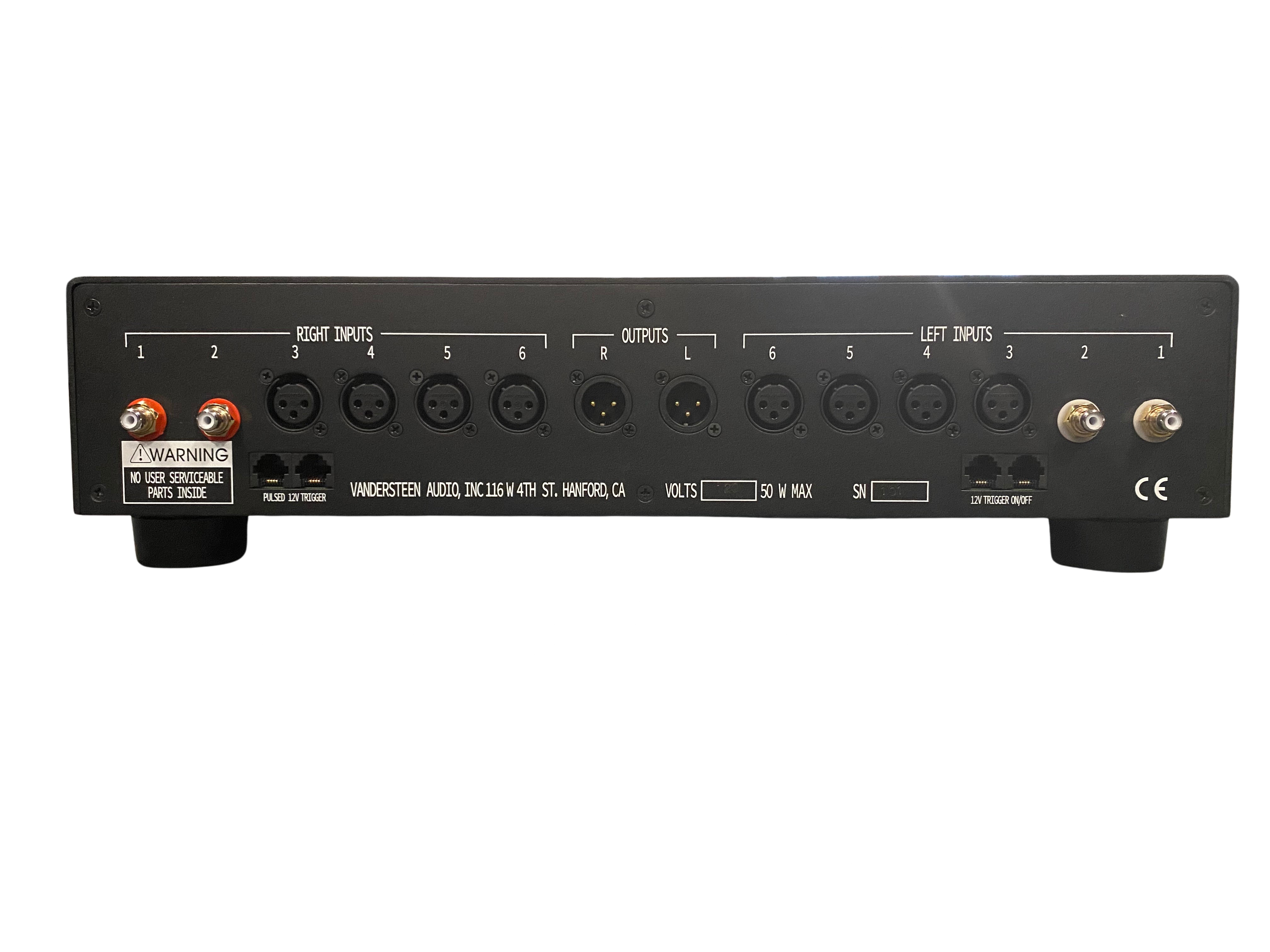
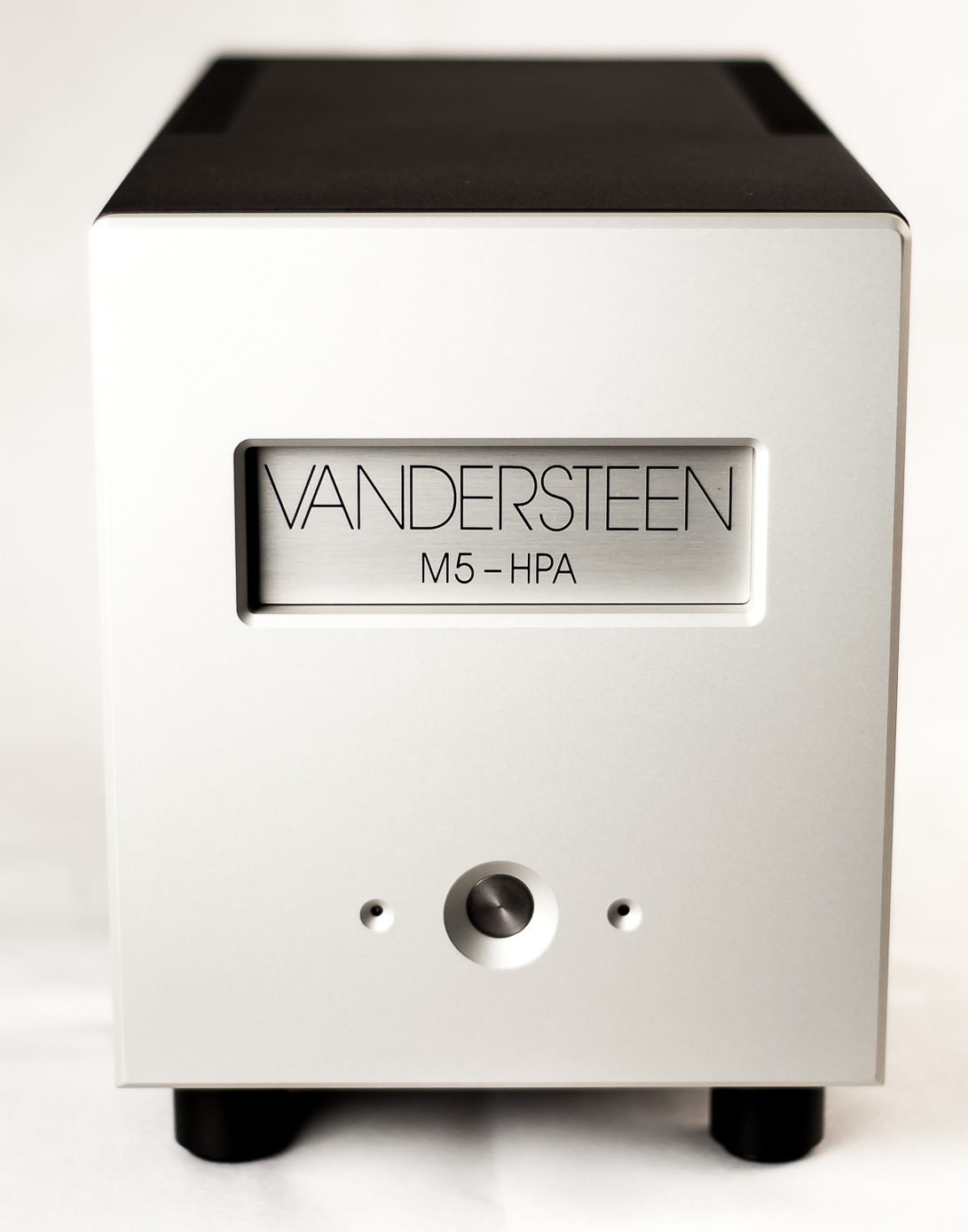
The Vandersteen L5-ACC is housed in a robust, vibration-resistant chassis that reflects the brand’s commitment to quality and longevity.  The bottom center location for the power cord attachment directly couples to the input power circuit.  A selection of feet both ground the chassis noise, and keep the unit level in use.

As you read and learn about this state-of-the-art Audio Control Center, you will also find that we added features not typically found in purist designs, although you may recognize them from vintage designs.  These system controls include bass boost or attenuation, treble boost or attenuation, a matrix solution, and mono-to stereo controls in steps.  However, unlike vintage designs, none of these features are in the circuit in Direct Mode. These added controls are “Smoke and Mirrors:” meant to augment your system enjoyment by manipulating recordings that are not normally enjoyable on your system.  These extra features come with the unit and represent a small relative price increase of $250.  If you don’t want it, the unit can be ordered without these extra features. Vandersteen ensures there will be no sonic difference with the Smoke and Mirrors module because the signal passes through no additional components in the direct mode.  Of further note, these added features are approved by audiophiles and music lovers, who have experienced them at shows and seminars, adding value to the listening experience. You will find these extra features on the remote, along with a large Direct Button. Should you get nervous about adding these extra smoke and mirrors, you can quickly return to the minimum component purist Audio Control Center circuit without smoke and mirrors by pushing the Direct Button to eliminate the extras.

With the new Vandersteen Audio Control Center, listeners can expect a remarkable improvement in soundstage depth, detail retrieval, and overall musicality. It’s a must-have for anyone looking to elevate their listening experience to the highest level, offering a sound as close to the original performance as possible.


L5-ACC Audio Control Center Specifications

Overall Gain                                                           12 dB

Gain Resolution                                                      1 dB, +/- 0.01 dB Over Entire Range

Frequency Response                                             10 Hz – 150 kHz, -3 dB @ 8 ohms > 10K

Maximum Input Level                                             110 volts (RMS) @ 0 dB Gain

Maximum Output Level                                          12 volts (RMS)

THD + Noise                                                           < .008% @ 1.5 volt (RMS) Output, 50 Hz – 20 kHz

 Signal-to-Noise Ratio                                             > 100 dB

Common Mode Rejection Ratio                              > 80 dB, 20 Hz – 20 kHz

Channel Separation                                                90 dB

Input Impedance                                                     100K Ohm Balanced or 50K Ohm Unbalanced

Output Impedance                                                   300 ohms Balanced or Unbalanced

Inputs                                                                        4 pair Balanced (XLR), 2 pair Unbalanced (RCA)

Outputs                                                                     2 pairs Balanced (XLR)

Power Consumption                                                 20 watts

Power Supply                                                           115 – 125 Volt AC

Display                                                                      Large Easy-Read Display

Audio Control Center Weight                                    22 lbs. / 10 kg

 udio Control Center Dimensions                             3.9” x 15.5” x 12.3” (99mm x 394mm x 312.5mm)

  • Nov 25, 2025
    L5-ACC Audio Control Center

    Leave it to Richard Vandersteen to think outside of the box when it comes to developing a linestage preamp companion to his M5-HPA and M7-HPA amplifiers.

    I had the opportunity to audition the new L5-ACC at Audio Connection in Verona, NJ last weekend at their annual Vandersteen seminar, hosted by Mr. Vandersteen himself. He's always an interesting guy to listen to, and his new product intros usually require an explanation of his design goals and implementation of those ideas. They are usually anything but conventional.

    The new L5-ACC (for Audio Control Center) did not disappoint. This is a $15,000 line stage that effectively integrates, in a pretty ingenious way, tone controls. Before everyone loses their **** on that part, there are a few points I should put out early. First, the tone control section is completely deflatable and out of the circuit path completely with zero sonic effect if the "Direct" button is pushed. Second is that the controls to the sound are not done with potentiometers- they are separate discrete circuits, 100% in the analog realm, and the "options" are thusly limited to a handful of predefined values. I believe there are four options for bass attenuation or boost, four options four options for treble attenuation or boost, and a "matrix" setting (adds fullness to the soundstage), and a stereo to mono in steps setting. He snarkily calls all of this his"Smoke and Mirrors" section of the unit. It's all controllable via the remote. One more thing - if the concept of even having fully defeat-able sound controls in your line stage offends you, you can buy the unit without this section, and save a whopping $250. (You won't want to delete this section, though.)

    The thought process for this line stage really comes from his listening habits. Vandersteen and his wife literally listen to hours of recorded music on their home system every night, taking turns DJ'ing the music choices. They have a broad range of tastes that span many decades of recording history. Older recordings, by and large, had to be mastered to the consumer medium (usually vinyl) in a way that wouldn't make the stylus jump from the grooves, and that would sound decent on mono speakers, car speakers, and generally lower grade consumer gear. A small percentage of people that spun records had premium equipment that could track low bass or that could accurately reproduce highs. Failure to adhere to these principles meant skipping records, and returns to the record stores for the "defective" pressings. Every generation of product has their own sonic issues. But yet we still want to listen to these pressings because we enjoy the music so much. If there are modern reissues/repressings, sometimes these issues can be corrected, but for the vintage records, you are often forced to put up with the sonic choices of the era of manufacture.

    So this line stage allows the listener to essentially make adjustments to the sound in small, defined steps - 2 down, 2 up, of bass and treble (I think I have that part right, but it may be three up and one down). This is 100% analog, and there is no digital manipulation. There is nothing digital about this line stage, period. The sound is clean without smoke and mirrors engaged, but the magic happens when an old record is on and the controls are utilized. If a recording sounds a little thin and the bass and drums are a bot too recessed, a press or two of the bass boost remarkably adds back this fullness in a way that is natural. It does not sound like a bass knob or a loudness contour. The treble is also effective. On a very clean original copy of Led Zeppelin II, Whole Lotta Love sounded pretty amazing on the reference system that included Model 7s and Sub Nine subs, as well as M7-HPAs. But when the bass when up one step, and the treble came DOWN one step, it all of a sudden sounded like Chad made a UHQR of the album - crisp, not harsh, full of energy. It was remarkable. We went not to listen to old Beach Boys pressings, Johnny Cash, some classical - a wide variety of choices, and not just on vinyl - the settings work well with CDs also. The room was pretty astounded by the effects of this device in the chain.

    Perhaps even more amazing, though, is the Matrix effect, which takes a small soundstage and gives it scale, without DSP or anything digital. The stereo to mono setting is a great way to reduce that crazy extreme early stereo effect (early Beatles stereo, for example) so that you can bring some of the sounds from the extreme left and right towards the middle, in several steps. It's worth hearing for yourself how well this works.

    I think the biggest mountain to overcome - and one that Vandersteen talks about at length - is the audiophile belief that tone controls are always bad, and that the records as-is are as God himself intended. Messing with them is blasphemy. But, as he walks through the changes in recording technology, and how so many compromises were purposely baked into recordings so that they would be most enjoyable to the masses in the 1950s-1990s, it all starts to make sense.

    One more big point he made was how the human ear does not hear low bass frequencies as well as high frequencies at low volumes. So if you like low level and/or late night listening sessions, sonic impact even with the best speakers and systems can suffer from lack of dynamics. That was the reason that the"loudness" button existed on old equipment in the first place - it's to recreate a "loud" sound at low volumes. Yes, it is smiley face, by design, for that listening circumstance. With this unit you can recreate that kind of change, but in the cleanest way possible, with no damage to the signal.

    There are three user-definable preset buttons where you can capture a combination of bass, treble, metric and stereo/mono settings. For example, you could have a 1950's jazz setting, a late night setting, and a 1990's alternative setting.

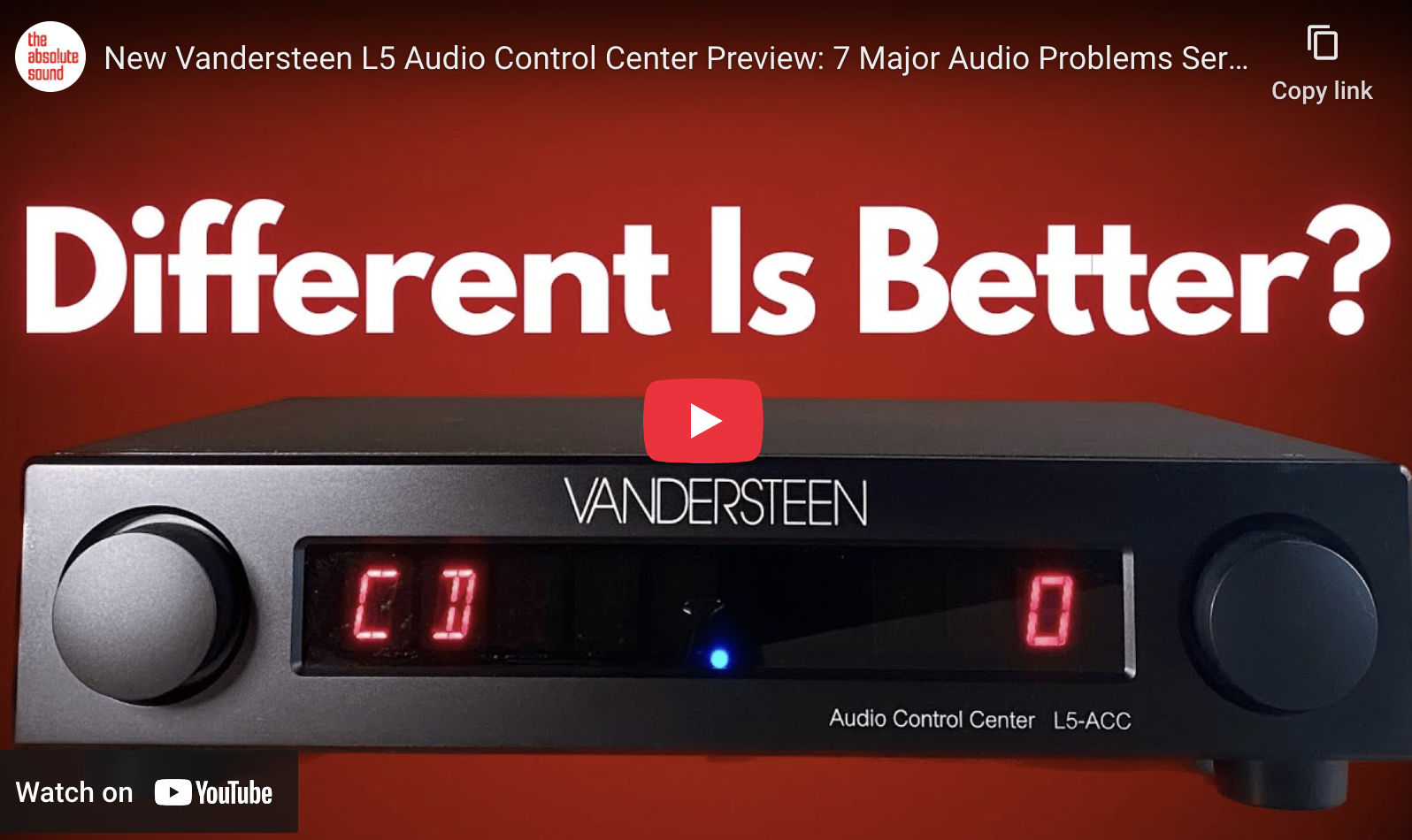
    Here is a video to an overview of this component by TAS, https://youtu.be/9RcLWRo20DY

    I've done enough damage to my audio fund this year, but this may be in the cards for me in the future. By the way, it does not have high passes or anything like that, and can be used with any speaker system or power amplifier(s).
     

    Drew

    See Full Review
  • Aug 22, 2025
    L5-ACC Audio Control Center

    Vandersteen addresses the issue of varied recording mix standards over the decades.

    Tom Martin

    See Full Review
  • Apr 22, 2025
    L5-ACC Audio Control Center

    Vandersteen’s room at AXPONA wasn’t about flash. It was about delivering a coherent musical experience, driven by engineering that serves the music above all else. Both the L5-ACC and Quatro CT Evo embody this philosophy—relentlessly focused on the integrity of the signal and the emotional impact of the performance.

    John Bugailiskis

    See Full Review